
Which Mortgage Is the Best Alternative to an Adjustable-Rate Mortgage?
A lower introductory mortgage rate can be appealing, especially when you're trying to keep your monthly housing costs manageable. But what happens when that rate changes?
If you're considering an adjustable-rate mortgage (ARM), it’s worth comparing it with other loan options before making a decision. The right mortgage depends on your budget, how long you plan to stay in the home, and how comfortable you are with the possibility of higher payments in the future.
For many buyers, a fixed-rate mortgage is the main alternative to consider. Here’s how the options compare and what to review before choosing a loan.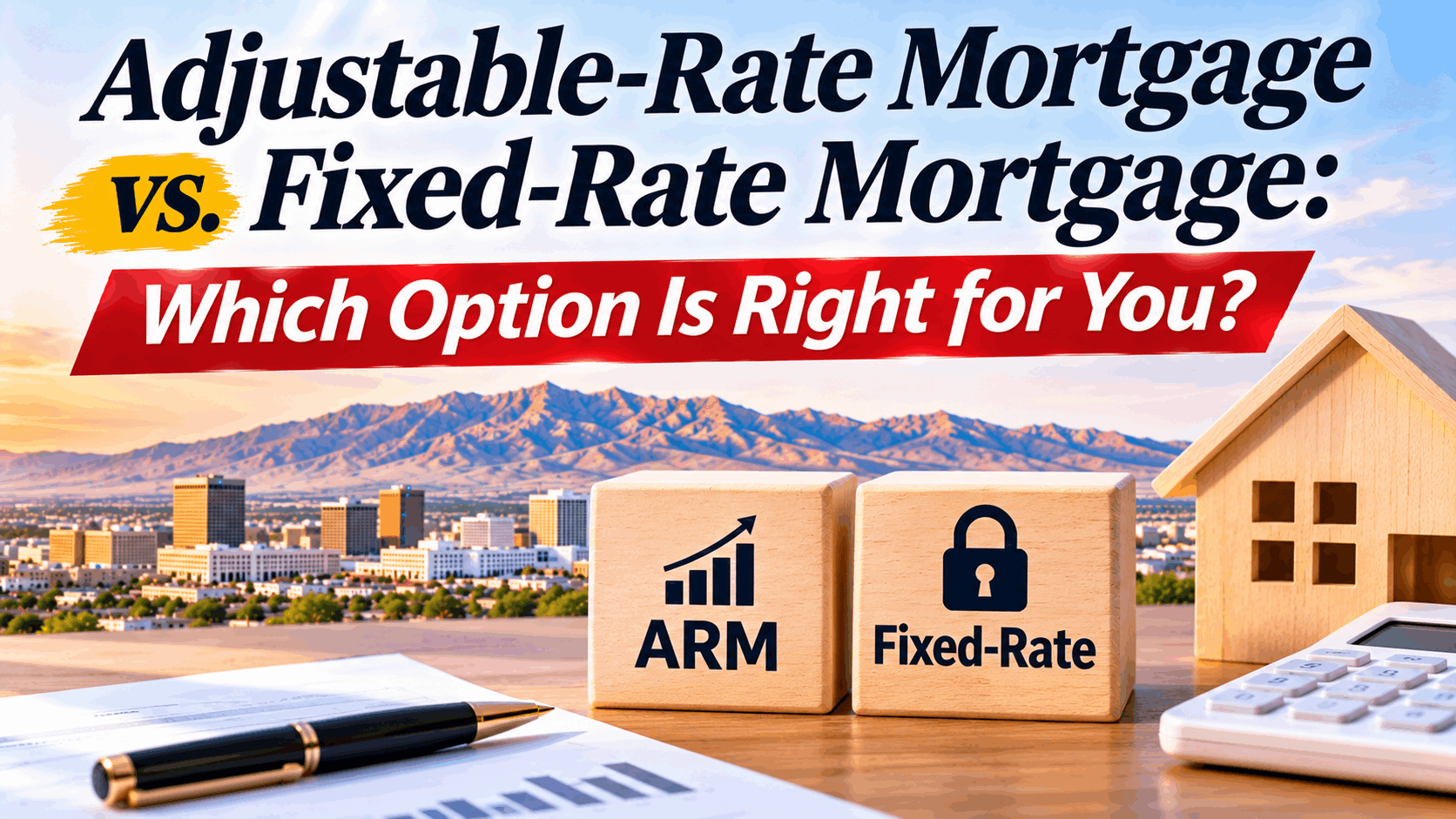
1. What Is an Adjustable-Rate Mortgage?
An adjustable-rate mortgage has an interest rate that stays fixed for an initial period and then adjusts according to the loan’s terms and market conditions.
For example, a 5/1 ARM generally has an introductory rate for five years, followed by rate adjustments each year. Other ARM structures may adjust on a different schedule.
The initial rate may be lower than the rate offered on a fixed-rate mortgage, but the monthly principal and interest payment can increase after the introductory period ends. The loan’s index, margin, adjustment schedule, and rate caps help determine how the rate changes.
2. Consider a Fixed-Rate Mortgage
A fixed-rate mortgage keeps the same interest rate for the life of the loan. That means your monthly principal and interest payment stays consistent, although property taxes, homeowners insurance, and other housing costs may change.
A fixed-rate mortgage may be worth considering if you:
- Prefer predictable monthly principal and interest payments
- Plan to stay in the home for many years
- Want to reduce the risk of a future rate increase
- Would have difficulty managing a higher mortgage payment
The trade-off is that the initial interest rate may be higher than the introductory rate on an ARM. Compare the full loan terms, not just the starting rate.
3. Compare the Two Mortgage Options
|
Feature |
Adjustable-Rate Mortgage (ARM) |
Fixed-Rate Mortgage |
|
Interest rate |
Fixed initially, then adjusts according to the loan terms |
Remains the same for the loan term |
|
Monthly principal and interest |
May increase or decrease after adjustments |
Stays consistent |
|
Potential benefit |
May offer a lower introductory rate |
Provides payment predictability |
|
Main risk |
Future payments may rise |
The initial rate may be higher than an ARM’s introductory rate |
|
May suit buyers who |
Expect to move or refinance before adjustments and can manage payment changes |
Prefer stability or plan to keep the home long term |
Neither option is automatically best for every buyer. Compare the interest rate, annual percentage rate (APR), fees, adjustment terms, and the payment you could face if the ARM reaches its maximum permitted rate.
4. When Might an ARM Make Sense?
An ARM may be worth evaluating if you expect to sell the home before the introductory rate period ends, or if you have a clear plan for managing future payment changes.
However, don’t assume you’ll be able to sell or refinance when you want to. Your circumstances, home value, and lending requirements could change. Make sure you could afford the payment if the rate adjusts higher.
5. What Should You Ask a Lender?
Before choosing a mortgage, ask the lender to explain:
- How long the introductory rate lasts
- When and how often the rate can adjust
- Which index and margin determine the adjusted rate
- The loan’s initial, periodic, and lifetime rate caps
- The highest possible monthly principal and interest payment
- Whether there are prepayment penalties or other fees
- How the ARM compares with a fixed-rate loan over the time you expect to own the home
Request written loan estimates so you can compare the costs and terms side by side.
Frequently Asked Questions
Is a fixed-rate mortgage always better than an ARM?
No. A fixed-rate mortgage offers more predictable principal and interest payments, while an ARM may offer a lower introductory rate. The better fit depends on your plans, finances, and ability to handle possible payment increases.
Can the payment on an ARM go down?
It can. If the index used to calculate the rate decreases, the interest rate and payment may decrease, subject to the loan’s terms. They can also increase.
Should I choose an ARM if I plan to move soon?
It may be an option to compare, but your plans can change. Consider whether you could afford the payment if you stay in the home longer than expected or cannot refinance.
What is the most important ARM detail to review?
Understand when the rate can adjust, how it is calculated, and how high it could go. Ask the lender to show you the maximum possible payment so you can evaluate whether it would fit your budget.
Final Thoughts
If you’re looking for an alternative to an adjustable-rate mortgage, a fixed-rate mortgage is a strong option to compare because it offers a more predictable principal and interest payment.
Still, the best choice depends on your financial situation and how long you expect to keep the home. Review the full loan terms, compare written estimates, and make sure you understand what your payment could look like in the future before deciding.
Or just reply to this email and let me know your timeline; we'll take it from there.
🌟 Reminder of the Day
“The best mortgage is not just the one with the lowest starting rate. It’s the one whose terms and payments you understand and can comfortably manage.”
With you every step,
Alexa Pena, Real Broker
📱 (844)523-1115 | 📧 info@investwithalexa.com
🌐www.investwithalexa.com | 📺 Watch our YouTube Channel
Recent Posts









GET MORE INFORMATION