
Selling a House in El Paso With Foundation Issues: What Sellers Need to Know
Selling a house with foundation issues in El Paso can feel overwhelming.
You may be wondering whether you need to repair the foundation before listing, whether buyers will still want the property, how much the issue could affect your home's value, and whether a lender will approve a buyer's mortgage.
The good news is that having a foundation issue does not automatically mean you cannot sell your El Paso home.
However, foundation problems can affect your home's marketability, financing options, buyer pool, negotiations, and potential sale price.
The right strategy depends on several factors, including the severity of the problem, the property's condition, your equity, your timeline, and whether the issue has been professionally evaluated.
El Paso also has some unique soil and climate conditions that can contribute to foundation movement. Expansive soils, caliche, drought cycles, heavy seasonal rainfall, and inconsistent irrigation can all affect how the soil beneath a home behaves.
If you are thinking about selling a house with foundation issues in El Paso, here is what you should know before deciding whether to repair, sell as is, or explore another strategy.
Why Are Foundation Issues Common in El Paso?
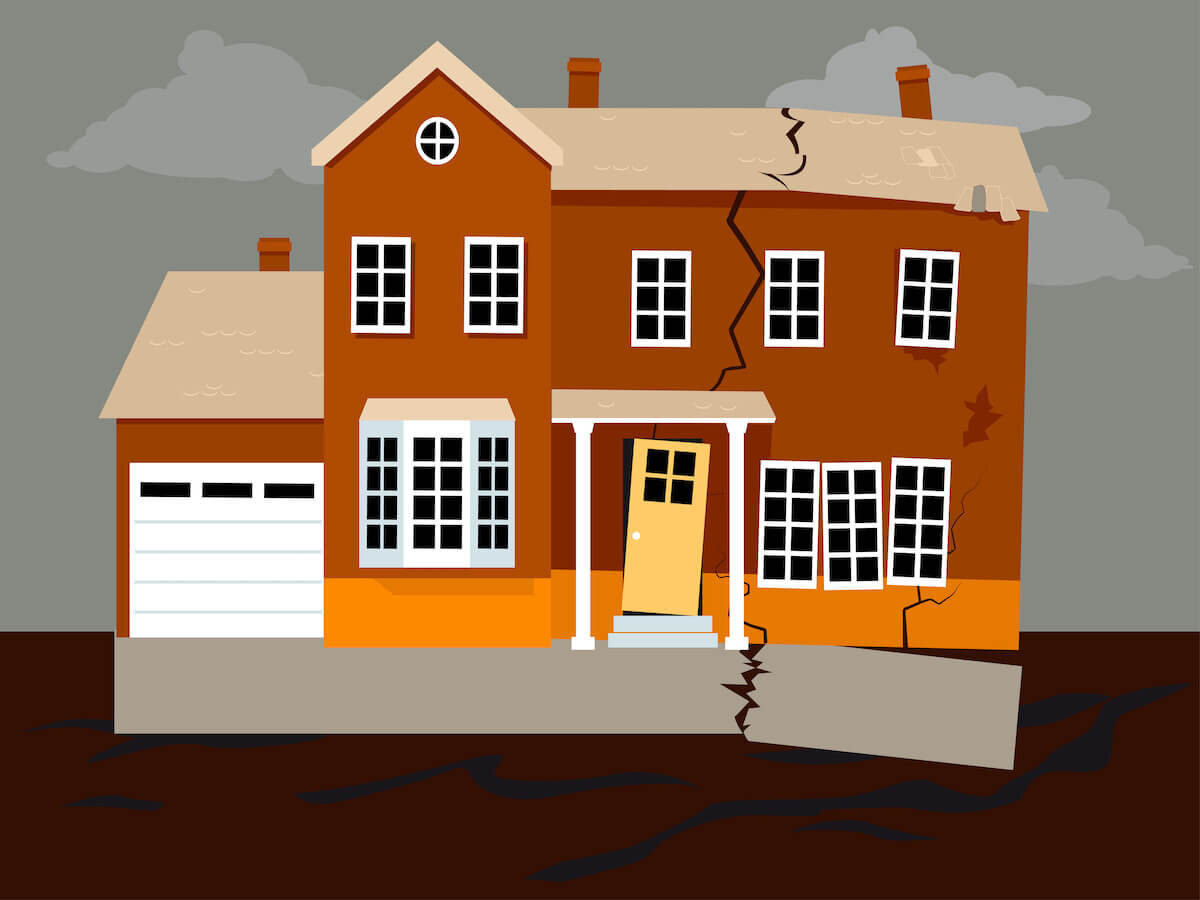
Foundation movement can occur in many parts of Texas, and El Paso has environmental and soil characteristics that can contribute to the problem.
One important factor is expansive clay soil.
Certain soils can absorb moisture and expand during wetter periods, then shrink during extended dry periods. Repeated expansion and contraction can place stress on a home's foundation over time.
El Paso also has caliche layers in the soil. In some areas, variations in soil composition can contribute to uneven settlement.
Other factors that may contribute to foundation movement include:
- Long periods of drought
- Heavy seasonal rainfall
- Poor drainage around the home
- Improper grading
- Inconsistent irrigation
- Overwatering one side of the property
- Soil movement beneath the slab
- Age and construction methods of the home
This does not mean every crack or uneven floor is evidence of a serious structural problem.
Some cracks are cosmetic and relatively common.
Others can indicate more significant movement.
That distinction is extremely important when selling a home.
Not Every Crack Means You Have a Foundation Problem
One of the biggest mistakes homeowners make is assuming every crack means the foundation is failing.
Small hairline cracks can occur in drywall, around windows, doors, ceilings, and other areas as a home naturally settles or materials expand and contract.
However, certain signs may warrant further investigation.
Potential warning signs can include:
- Significant cracks in foundation slabs
- Horizontal cracks in concrete block walls
- Stair-step cracks in brick
- Doors or windows that suddenly become difficult to open
- Floors that noticeably slope
- Cracks that continue to widen
- Gaps around doors or windows
- Separation between walls and ceilings
- Uneven areas of flooring
- Repeated plumbing or drainage issues
These signs do not automatically prove that a home has major structural damage.
They simply indicate that getting a professional evaluation may be worthwhile.
How Can You Tell if the Foundation Problem Is Serious?
If you are preparing to sell your home and are concerned about foundation movement, consider getting an independent assessment.
A structural engineer can evaluate the property and provide an opinion about the condition of the structure.
This can be particularly useful because a foundation repair company may have a financial interest in recommending repair work.
That does not mean foundation repair companies are unreliable.
It simply means that getting an independent opinion can give you additional information before spending thousands of dollars.
The original source recommends obtaining an assessment from a licensed structural engineer when the severity of the problem is unclear, with a typical structural engineer evaluation potentially costing several hundred dollars.
The exact cost depends on the property and professional you hire.
Do You Have to Fix Foundation Issues Before Selling in Texas?
Generally, there is no universal requirement that a homeowner must repair every foundation defect before selling a property.
However, known material defects generally need to be disclosed to potential buyers under Texas law.
That can include known foundation movement, significant cracking, previous foundation repairs, water intrusion associated with the foundation, and relevant structural assessments or reports.
The specific disclosure requirements depend on the circumstances and applicable law, so sellers should consult a qualified Texas real estate attorney if they have questions about their legal obligations.
The important distinction is:
You may not necessarily have to repair the problem, but you should not assume you can simply hide a known material defect.
Failing to properly disclose known issues can create legal and financial problems later.
When in doubt about a disclosure issue, seek professional legal guidance.
What Should You Disclose About Foundation Problems?
If you know about a foundation issue, gather all relevant documentation before listing the property.
This may include:
- Previous inspection reports
- Structural engineer reports
- Foundation repair invoices
- Repair estimates
- Warranty documentation
- Transferable foundation warranties
- Information about previous water intrusion
- Records showing when repairs were completed
- Photos documenting previous repairs
Having documentation can help buyers understand what happened and what has already been done.
A property with a professionally documented repair and transferable warranty may be easier for buyers to evaluate than a property with an unexplained crack and no records.
Should You Repair the Foundation Before Selling?
This is one of the biggest decisions you will need to make.
There is no single answer for every El Paso home.
The decision should consider:
- The severity of the foundation problem
- Estimated repair cost
- Your available funds
- Your equity
- The home's current market value
- Your desired timeline
- Buyer demand
- Financing requirements
- Whether the repair comes with a transferable warranty
For a minor issue, repairing the problem before listing may make sense.
For a major structural issue, the financial calculation can be much more complicated.
Option 1: Repair the Foundation Before Listing
Repairing the foundation before putting the home on the market can have several potential benefits.
A completed repair may:
- Improve buyer confidence
- Expand the potential buyer pool
- Reduce inspection concerns
- Make financing easier
- Provide documentation for future buyers
- Reduce the likelihood of last-minute negotiations
- Potentially improve the home's marketability
If the repair comes with a transferable warranty from a reputable contractor, that documentation may provide additional reassurance to buyers.
However, repairs can be expensive.
There is also no guarantee that every dollar spent on a foundation repair will be recovered through a higher sale price.
For significant repairs, obtain multiple estimates and consider getting an independent structural opinion before making the investment.
Option 2: Sell the House As Is
Another option is to sell the property in its current condition.
An as-is sale can make sense for homeowners who:
- Need to sell quickly
- Do not have funds available for repairs
- Do not want to manage construction
- Have limited equity
- Own a distressed property
- Prefer to sell without making major improvements
The tradeoff is that buyers will likely account for the foundation problem when determining what they are willing to pay.
You may also attract more investors and cash buyers, depending on the severity of the issue.
Option 3: Offer a Repair Credit
Instead of repairing the foundation yourself, you may be able to negotiate a credit with the buyer.
For example, if a buyer is willing to purchase the property but is concerned about a foundation issue, the contract could potentially include an agreed credit toward eligible costs, subject to the terms of the transaction and applicable lender requirements.
This approach can allow the buyer to manage the repair themselves.
However, lender rules may limit the type or amount of credits allowed.
The specific terms should be discussed with the buyer's lender and the professionals handling the transaction.
How Much Can Foundation Problems Reduce Your Home's Value?
There is no universal percentage that applies to every property.
The effect can vary dramatically depending on:
- Severity of the foundation problem
- Estimated repair cost
- Location
- Home value
- Age of the property
- Availability of repair documentation
- Financing options
- Buyer demand
- Whether the issue has already been repaired
- Whether a transferable warranty exists
A minor, documented repair may have a relatively small effect on marketability.
A major unresolved structural problem can have a much greater effect because it may reduce the number of buyers who can or will purchase the property.
The original source estimates that significant foundation problems can reduce buyer offers, while cash buyers may also discount their offers to account for repair costs and investment risk. These figures should be treated as general examples rather than a guaranteed percentage for every El Paso home.
The best way to understand the impact on your particular property is to obtain a market analysis that accounts for the home's condition and comparable sales.
Can You Get a Mortgage on a House With Foundation Issues?
This is an important consideration.
Foundation problems can create complications for buyers using mortgage financing.
Depending on the severity and circumstances, a lender may require certain structural issues to be repaired before approving a loan.
Government-backed loans can also have property condition requirements.
For example, FHA and VA financing may have requirements concerning safety, structural soundness, and property condition. Whether a particular foundation issue prevents financing depends on the specific circumstances and the lender's evaluation.
This matters in El Paso because the local market includes many military and first-time buyers who may use VA or FHA financing.
If a significant foundation issue eliminates financed buyers from consideration, the seller may have a smaller buyer pool.
Cash buyers may still be interested, but they will generally factor the property's condition and expected repair costs into their offer.
What About VA Buyers and Foundation Problems?
VA buyers are an important part of the El Paso housing market because of the area's large military population.
A home with significant unresolved structural concerns may create complications during the VA appraisal and loan process.
That does not mean every foundation crack will prevent a VA buyer from purchasing the property.
The specific condition of the home and the requirements of the lender and VA appraisal process matter.
If you are selling a property with known foundation concerns, it can be helpful to understand whether the issue could affect financing before putting the home on the market.
Should You Get a Structural Engineer or Foundation Company?
Ideally, understand the difference between the two.
A structural engineer provides an independent professional assessment of structural conditions.
A foundation repair company evaluates the property from the perspective of potential repair solutions.
Both can provide useful information.
However, if you are uncertain whether a major repair is actually necessary, an independent structural evaluation can provide another perspective before you authorize expensive work.
For significant foundation concerns, getting multiple opinions can be a valuable part of the decision-making process.
How Much Does Foundation Repair Cost in El Paso?
Foundation repair costs can vary dramatically.
A minor repair may cost a few thousand dollars.
More extensive structural work can cost tens of thousands of dollars.
The actual price depends on factors such as:
- Foundation type
- Extent of movement
- Number of affected areas
- Soil conditions
- Required piers or supports
- Drainage problems
- Accessibility
- Engineering requirements
- Warranty terms
Do not rely on a generic online estimate when making a major financial decision.
Get written estimates from qualified professionals and compare the scope of work carefully.
Is Foundation Repair Worth It Before Selling?
The answer depends on the numbers.
Consider a simplified example.
Suppose your home could potentially sell for:
$300,000 with the foundation repaired
The estimated repair cost is:
$20,000
You might assume repairing the foundation automatically gives you an additional $20,000 in value.
But real estate does not always work that way.
The repair may improve buyer confidence and financing options without increasing the home's value dollar for dollar.
You may also have carrying costs, additional time on the market, and other expenses while completing the work.
Instead of asking:
"Will I get my repair money back?"
Consider asking:
"How will repairing the foundation affect my buyer pool, sale price, financing options, and expected net proceeds?"
That is a much more useful question.
How to Sell a House With Foundation Issues in El Paso
If you have decided to sell, start by understanding the property's condition.
Step 1: Get the Problem Evaluated
If the severity is unclear, consider an independent structural assessment.
Step 2: Gather Your Documents
Collect previous inspections, repair invoices, warranties, engineering reports, and other relevant records.
Step 3: Determine Your Home's Current Market Value
Get a comparative market analysis based on recent sales.
Step 4: Estimate Repair Costs
Obtain multiple written estimates if repairs are necessary.
Step 5: Compare Your Options
Calculate the potential financial difference between:
- Repairing and listing
- Selling as is
- Offering a buyer credit
- Seeking a cash buyer
Step 6: Understand Your Disclosure Obligations
Make sure known material defects are properly disclosed according to applicable Texas requirements.
Step 7: Price the Home Strategically
A foundation issue should be reflected in the property's pricing strategy.
Overpricing a home with a known structural concern can result in longer days on market and more difficult negotiations.
Step 8: Market the Property Honestly
Professional marketing does not mean hiding the problem.
The goal is to accurately present the property while highlighting its legitimate strengths.
Step 9: Review Offers Based on Net Proceeds
Do not automatically choose the highest purchase price.
Consider financing, contingencies, repair requests, closing timeline, concessions, and the likelihood of a successful closing.
Can You Sell a House With Foundation Problems to a Cash Buyer?
Yes, cash buyers and investors may be interested in homes with foundation problems.
One advantage is that a cash buyer may not have the same financing restrictions as a traditional mortgage buyer.
However, that does not mean the buyer will pay full market value.
An investor generally considers:
- Repair costs
- Holding costs
- Resale value
- Closing expenses
- Property taxes
- Insurance
- Financing or capital costs
- Investment risk
The buyer may therefore offer less than a traditional buyer might pay for a fully repaired property.
If you consider this route, compare multiple offers and look at the complete terms rather than focusing only on the advertised purchase price.
How Foundation Issues Affect Your Negotiation
A buyer who discovers a foundation issue during the inspection period may ask for:
- Repairs
- A price reduction
- A closing cost credit
- A repair credit
- Additional inspections
- A structural engineer evaluation
- Contract termination, depending on the contract terms
This is why getting ahead of the issue can sometimes be valuable.
If you already have a professional report explaining the condition, you may be able to provide buyers with more information before they make an offer.
That does not eliminate negotiations, but it can reduce uncertainty.
What Foundation Problems Should You Take Seriously?
Not every crack requires the same response.
Potentially more concerning signs can include:
- Significant horizontal foundation or block wall cracks
- Stair-step cracks in brick
- Large or widening slab cracks
- Noticeably sloping floors
- Doors that no longer close properly
- Windows that suddenly become difficult to operate
- Separation between walls and ceilings
- Significant gaps around doors and windows
- Evidence of ongoing movement
- Repeated water intrusion
Again, these signs do not independently establish the cause or severity of a structural problem.
A qualified professional should evaluate significant concerns.
Common Mistakes When Selling a House With Foundation Issues
Mistake 1: Hiding the Problem
Trying to conceal a known material defect can create serious problems.
Be transparent and properly disclose known issues.
Mistake 2: Assuming Every Crack Requires a $30,000 Repair
Do not assume the worst without an evaluation.
Some cracks are cosmetic or minor.
Get professional information before spending significant money.
Mistake 3: Getting Only One Repair Estimate
Foundation repair recommendations and prices can vary.
Get multiple opinions and understand exactly what each proposal includes.
Mistake 4: Spending Too Much Before Listing
A major repair does not automatically increase your sale price by the same amount.
Calculate the expected return before investing.
Mistake 5: Ignoring Financing
If the property cannot qualify for certain types of financing because of unresolved structural concerns, your buyer pool may become smaller.
Understand this before deciding on a listing strategy.
Mistake 6: Pricing the Property Like a Fully Repaired Home
Buyers will consider the condition of the property.
Your pricing strategy should account for the foundation issue and the likely cost and inconvenience of addressing it.
Mistake 7: Accepting the First Cash Offer
If you decide to sell as is, compare multiple offers when possible.
Look at the purchase price, closing date, contingencies, proof of funds, fees, and other terms.
Frequently Asked Questions About Selling a House With Foundation Issues in El Paso
Do I have to repair foundation problems before selling my El Paso home?
Not necessarily. Texas does not generally require a seller to repair every property defect before selling. However, known material defects may need to be disclosed. The specific legal requirements depend on the circumstances, so consult a qualified Texas real estate attorney if you have questions about your disclosure obligations.
Can I sell my El Paso house as is with foundation problems?
Yes, a home can potentially be sold as is. However, the condition may affect the price, buyer pool, financing options, and negotiations.
Will foundation problems prevent my house from selling?
Not necessarily. Homes with foundation problems can still be sold. The severity of the issue, price, documentation, financing options, and buyer demand all matter.
Can I sell a house with foundation problems to a cash buyer?
Yes. Cash buyers and investors may purchase homes with structural concerns, particularly when the property needs significant repairs. Their offers will generally reflect the expected repair costs and investment risk.
Can an FHA buyer purchase a home with foundation problems?
It depends on the condition of the property and the lender's requirements. Significant structural issues may create financing complications and could require repairs before the loan can close.
Can a VA buyer purchase a house with foundation problems?
Potentially, depending on the condition of the property and applicable appraisal and lender requirements. Significant unresolved structural concerns can create financing complications.
Should I get a structural engineer before selling?
If you are unsure about the severity of a foundation issue, an independent structural evaluation can provide useful information before you decide whether to repair or sell as is.
How much does a foundation inspection cost in El Paso?
Costs vary depending on the professional and scope of the evaluation. A structural engineer assessment can cost several hundred dollars, but sellers should obtain a current quote before scheduling an inspection.
How much does foundation repair cost?
There is no universal price. Minor repairs may cost a few thousand dollars, while major structural repairs can cost tens of thousands. Get multiple written estimates for your specific property.
Can foundation repairs increase my home's value?
A completed repair can improve buyer confidence and potentially expand the financing and buyer pool. However, you should not assume that every dollar spent on repairs will translate directly into an equal increase in sale price.
Should I repair or sell my house as is?
Compare the estimated repair cost, potential sale price after repairs, likely as-is sale price, timeline, financing considerations, and expected net proceeds. A professional market analysis and independent structural assessment can help you evaluate the options.
Selling a House With Foundation Issues in El Paso: Seller Checklist
Before listing your property, consider the following:
- Identify the foundation concerns.
- Determine whether the issue is cosmetic or potentially structural.
- Obtain an independent professional assessment when appropriate.
- Get multiple repair estimates.
- Gather previous repair records.
- Locate any transferable warranties.
- Review your disclosure obligations.
- Determine your home's value in its current condition.
- Estimate the home's potential value after repairs.
- Calculate the expected cost of repairs.
- Consider how repairs could affect financing.
- Compare selling as-is with repairing before listing.
- Consider whether a cash buyer makes sense for your situation.
- Price the property based on its actual condition.
- Compare offers based on total terms and expected net proceeds.
Final Thoughts
Selling a house with foundation issues in El Paso does not automatically mean you have to accept a significantly discounted offer or spend tens of thousands of dollars on repairs.
You have options.
Depending on the circumstances, you may be able to repair the foundation before listing, sell the property as is, negotiate a repair credit, or consider cash buyers and investors.
The key is understanding the problem before making a decision.
Start with an independent evaluation when appropriate.
Then determine your home's realistic market value, estimate the cost of repairs, understand your disclosure obligations, and compare the potential net proceeds of each strategy.
Remember that foundation issues are not all the same.
A small cosmetic crack is very different from significant structural movement.
The more information you have, the easier it becomes to make a decision based on numbers rather than fear.
If you are preparing to sell a home with foundation concerns in El Paso, take the time to understand the condition of the property, the likely buyer pool, the financing implications, and the financial impact of repairing versus selling as is.
Or just reply to this email and let me know your timeline; we'll take it from there.
🌟 Reminder of the Day
“A foundation problem does not automatically mean your home cannot sell. Before spending thousands of dollars on repairs or accepting a discounted cash offer, find out what the problem actually is, what the repair may cost, what your home could be worth in its current condition, and how the issue could affect your buyer pool. The goal is not simply to sell the house. The goal is to understand your options and choose a selling strategy based on accurate information.”
With you every step,
Alexa Pena, Real Broker
📱 (844)523-1115 | 📧 info@investwithalexa.com
🌐www.investwithalexa.com | 📺 Watch our Youtube Channel
Recent Posts



GET MORE INFORMATION